

Phonics and Early Reading at St. Joseph’s School
At St. Joseph’s School, we believe that learning to read is one of the most important skills a child will develop. Reading opens the door to learning, imagination and unlocks access to the wider KS1 and KS2 curriculum. Our aim is for every child to become a confident, fluent reader who develops a lifelong love of books.
To teach early reading and spelling, we follow Anima Phonics: Letters and Sounds Updated, a systematic synthetic phonics programme that provides children with the knowledge and skills they need to become successful readers and writers.
What is Anima Phonics?
Anima Phonics is an engaging and carefully structured phonics programme that teaches children the relationship between letters and sounds.
The programme brings phonics to life through colourful animal characters, memorable actions, songs, poems and interactive activities. Each new sound is introduced alongside an animal character and action, helping children to remember what they have learned and apply their knowledge when reading and writing.
Through daily phonics lessons, children progressively develop three essential skills:
-
Blending – recognising the sounds represented by letters and joining them together to read words. For example, c-a-t becomes 'cat'.
-
Segmenting – breaking spoken words into individual sounds to help with spelling and writing.
-
Handwriting – learning to form letters correctly and linking written letters to the sounds they represent.
How is Phonics Taught?
Phonics is taught daily through structured, interactive lessons that build upon children's existing knowledge.
Lessons follow a consistent approach, providing opportunities to revisit previously taught sounds, learn new letter-sound correspondences and practise applying these skills in reading and writing.
In Reception, children begin by learning individual letter sounds before progressing to digraphs (two letters representing one sound, such as 'sh') and trigraphs (three letters representing one sound, such as 'igh'). They learn to blend sounds to read words and segment words to support their early writing.
As children progress through Reception and Key Stage 1, they consolidate their knowledge and learn more complex spelling patterns, alternative ways of representing sounds and increasingly challenging vocabulary.
The programme also introduces common exception words, known as 'Rainbow Words'. These are words containing unusual or not-yet-taught spelling patterns. Children learn to recognise the 'tricky' parts of these words while continuing to use their phonics knowledge to read them.
Reading Books
Reading practice is an essential part of our phonics teaching.
Children are provided with carefully selected, fully decodable reading books that closely match the sounds and spelling patterns they have been taught. This allows them to practise their developing skills successfully, building confidence, accuracy and fluency.
As children's phonics knowledge grows, they progress through increasingly challenging texts.
Alongside phonics reading books, we encourage children to enjoy a wide variety of stories, picture books, poems and other texts. Sharing books and listening to stories helps children develop vocabulary, comprehension, imagination and, importantly, a love of reading.
Our Home Reading Expectations
Regular reading at home is essential in helping children become confident and fluent readers. At St. Joseph's, we encourage all children to develop positive reading habits from the very beginning of their school journey.
Reception
We expect Reception children to read their phonics reading book at home at least four times each week.
There is no set time requirement for Reception children, as their early phonics books are often very short. The emphasis is on regular practice, developing confidence and celebrating each child's achievements.
Repeated reading of the same book is particularly beneficial, helping children to recognise sounds more quickly, blend words confidently and develop fluency.
Year 1
We expect Year 1 children to read at home at least five times each week, for approximately 10 minutes per session.
Regular reading provides valuable opportunities to practise phonics, develop fluency and build confidence when approaching unfamiliar words.
Children should read their school reading book, revisiting familiar texts to improve accuracy, expression and understanding.
Reading Records and Rewards
We ask parents and carers to record each reading session in their child's reading log. This helps us celebrate their achievements and maintain a positive partnership between home and school.
Children who complete four recorded reads each week are recognised and rewarded for their commitment to reading.
Where children have completed fewer than three recorded reads during the week, they will be given an additional opportunity to read with an adult in school during playtime. This ensures that all children receive regular reading practice and the support they need to make progress.
We greatly appreciate the support of parents and carers in establishing these important reading routines.
Supporting Every Child
We recognise that children learn at different rates. Regular assessment helps teachers identify each child's strengths and any areas where additional practice may be needed.
Children who require further support are given opportunities to revisit and consolidate their learning through targeted activities, small-group work or individual support.
Our aim is to ensure that every child receives the teaching and encouragement they need to develop secure foundations in reading and writing.
How Can Parents Help at Home?
Parents and carers play a vital role in supporting their child's reading development. Regular reading practice at home makes a significant difference to children's confidence and progress.
There are several simple ways you can help:
-
Listen to your child read their school phonics book regularly, encouraging them to use their sounds to read unfamiliar words.
-
Encourage your child to say the sounds and blend them together from left to right, rather than guessing words from pictures.
-
Practise recognising sounds using the animal characters and actions from Anima Phonics.
-
Encourage your child to segment words into individual sounds when attempting to spell.
-
Celebrate your child's efforts and achievements, making reading a positive and enjoyable experience.
-
Read stories aloud to your child and talk about the characters, events and vocabulary. This remains important even as children become more independent readers.
-
Re-read familiar books to help develop reading fluency, expression and confidence.
Most importantly, make time to enjoy reading together. Little and often is far more beneficial than lengthy sessions, particularly for younger children.
Working Together to Develop Confident Readers
At St. Joseph’s School, we are committed to giving every child the strongest possible foundations in reading. Through our consistent approach to phonics, carefully matched reading materials and close partnership with families, we aim to nurture enthusiastic, confident and successful readers.
For more information about the Anima Phonics programme, please visit:
-
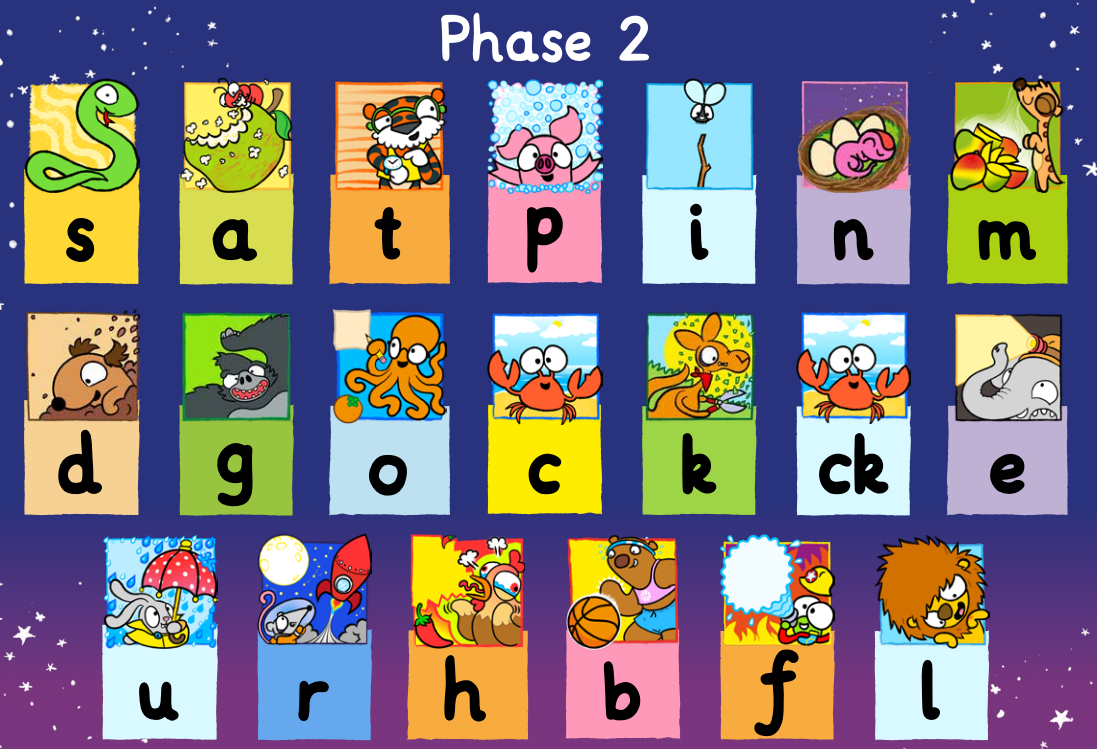
Phase 2 Sounds
-
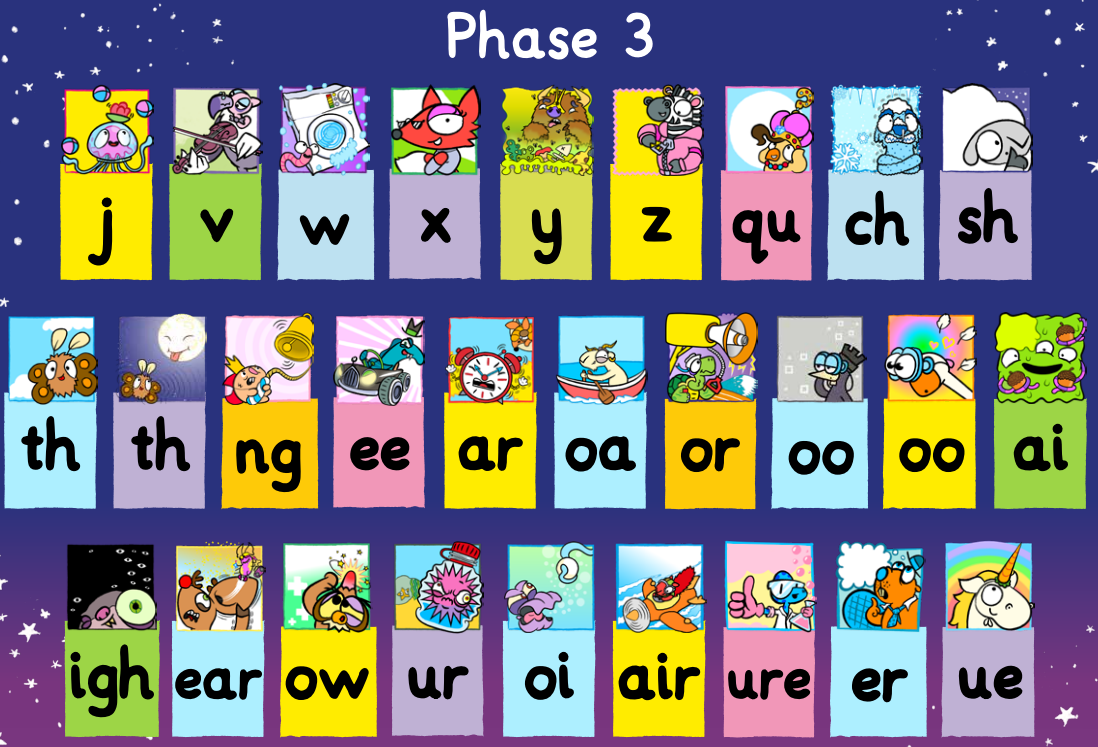
Phase 3 Sounds